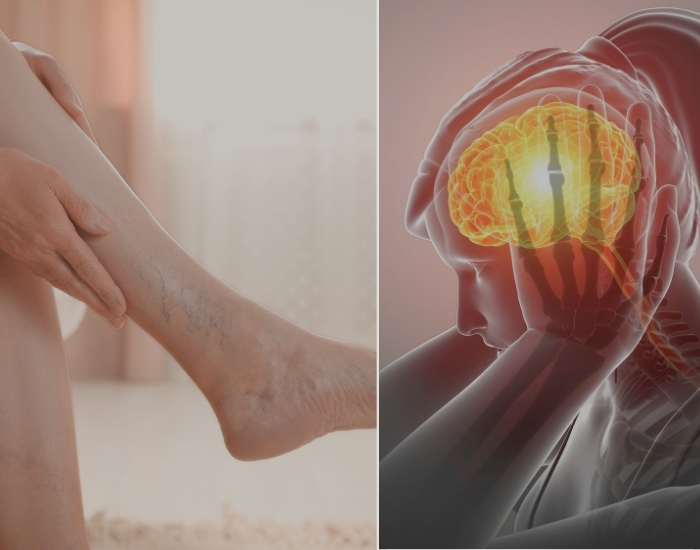

Noticing that the veins in your legs suddenly look more prominent can be alarming, especially if they were barely noticeable before. Sometimes, visible veins are completely normal. Veins can become easier to see after exercise, weight loss, increased heat, dehydration, or simply as the skin becomes thinner with age.
However, newly prominent veins can also be associated with varicose veins, chronic venous insufficiency, or venous reflux. The difference often depends on how the veins look, whether they are becoming progressively more noticeable, and whether you have other symptoms such as aching, swelling, heaviness, itching, or skin changes.
So, should you be concerned about visible veins on your legs? Not necessarily. But if the change is new or accompanied by other symptoms, it is worth understanding what may be happening beneath the skin.
Quick Answer: Veins in your legs can become more visible because of exercise, heat, weight loss, aging, genetics, or naturally thin skin. However, increasingly prominent, twisted, bulging, or rope-like veins may be associated with varicose veins or underlying venous reflux. Visible veins accompanied by leg pain, swelling, heaviness, itching, skin discoloration, or non-healing wounds should be evaluated by a healthcare professional.
Table of Contents
- Are Visible Veins on the Legs Normal?
- Why Are the Veins in My Legs More Visible?
- 1. Exercise and Increased Blood Flow
- 2. Heat and Hot Weather
- 3. Weight Loss
- 4. Aging and Thinner Skin
- 5. Genetics
- 6. Dehydration
- 7. Varicose Veins
- 8. Chronic Venous Insufficiency and Venous Reflux
- Symptoms That Suggest a Vein Problem
- Normal Visible Veins vs. Problematic Veins
- Why Did My Veins Suddenly Become More Visible?
- How Are Prominent Leg Veins Evaluated?
- Treatment for Prominent or Varicose Veins
- Can You Prevent Veins From Becoming More Visible?
- When Are Visible Veins an Emergency?
- Visible Veins and Vein Care in Houston
- Frequently Asked Questions
Are Visible Veins on the Legs Normal?
Yes. It is normal for some veins to be visible beneath the skin, particularly on the legs, feet, hands, and arms. Superficial veins are located relatively close to the surface of the skin, so their appearance can vary depending on body composition, temperature, activity level, age, and genetics.
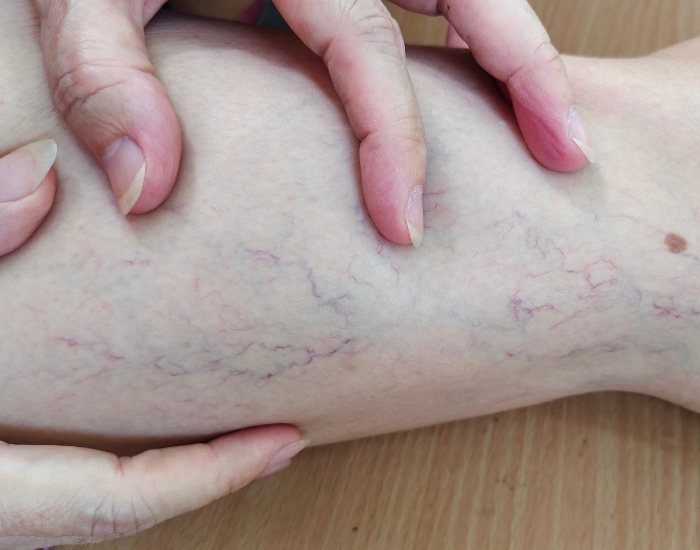
A vein that is visible but remains relatively straight, soft, and unchanged may simply be a normal superficial vein.
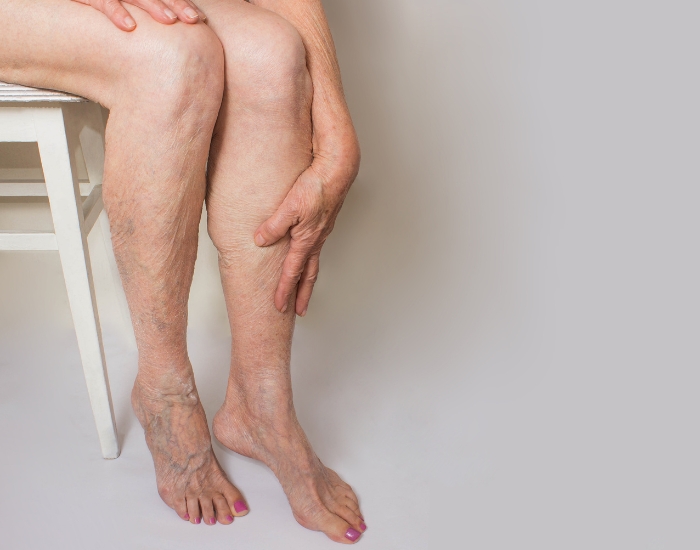
The concern increases when veins become progressively more prominent or develop a bulging, twisted, rope-like appearance. This can occur with varicose veins, particularly when the valves inside the veins are not functioning properly.
It is also important to consider whether the visible veins are accompanied by symptoms. A cosmetic change without other symptoms may require a different approach than prominent veins associated with swelling, aching, skin changes, or chronic venous disease.
Why Are the Veins in My Legs More Visible?
There is no single reason why veins become more noticeable. Several temporary and long-term factors can make the veins in your legs easier to see.
Some of the most common causes include:
- Exercise
- Hot weather or heat exposure
- Weight loss
- Aging
- Genetics
- Dehydration
- Low body fat
- Pregnancy or hormonal changes
- Varicose veins
- Chronic venous insufficiency
- Venous reflux
- Prolonged standing
Understanding the difference between temporary vein visibility and progressive venous disease is important when deciding whether you need an evaluation.
1. Exercise and Increased Blood Flow
One of the most common reasons veins become temporarily more visible is exercise.
During physical activity, your muscles require more oxygen and nutrients. Blood flow increases, and veins near the surface of the skin can become more prominent. This is especially noticeable after strength training, running, cycling, or other intense activities.
People with lower body fat may notice this effect more clearly because there is less tissue between the skin and the superficial veins.
Exercise-related vein visibility generally decreases after your body returns to its resting state.
If the veins remain increasingly prominent over time or are accompanied by aching, swelling, or other symptoms, however, exercise may not be the only explanation.
2. Heat and Hot Weather
Temperature can also affect how visible your veins appear.
When you are exposed to heat, blood vessels near the surface of the skin can widen as your body works to regulate temperature. This can make superficial veins more noticeable.
You may therefore notice more visible veins during:
- Hot summer weather
- Hot showers or baths
- Sauna use
- After exercise
- Periods of prolonged heat exposure
This type of increased visibility is usually temporary.
3. Weight Loss
Significant weight loss can make veins easier to see because there may be less fatty tissue beneath the skin.
A vein that was always present may simply become more visible after losing body fat. This does not necessarily mean that the vein has developed a medical problem.
However, if visible veins appear together with swelling, pain, heaviness, or changes in the skin, it is worth considering whether an underlying venous condition is contributing.
4. Aging and Thinner Skin
As you age, the skin can become thinner and lose some of its underlying support. Changes in skin thickness and connective tissue can make veins that were previously difficult to see much more noticeable.
This is one reason prominent veins are common in older adults.
Age-related visibility alone does not mean you have varicose veins or venous insufficiency. The shape and behavior of the veins, along with other symptoms, are important.
5. Genetics
Some people naturally have more visible veins than others.
Genetics can influence:
- Skin thickness
- Body fat distribution
- Vein structure
- Vein valve function
- Risk of developing varicose veins
If close family members have varicose veins, you may have a greater tendency to develop them as well.
Our guide to varicose vein risk factors explains some of the factors that can increase your likelihood of developing vein disease.
6. Dehydration
Dehydration can sometimes make superficial veins appear more prominent, particularly when combined with heat or physical activity.
However, dehydration is not a typical explanation for veins that remain progressively enlarged or twisted over weeks, months, or years.
If your veins are consistently more visible and you also have leg swelling, aching, heaviness, or other symptoms, an underlying vein problem should be considered.
7. Varicose Veins
Varicose veins are enlarged, twisted veins that commonly develop in the legs. They occur when the veins and their valves do not effectively move blood back toward the heart.
Instead of moving efficiently upward, some blood can flow backward and collect in the veins. This can increase pressure within the affected veins and cause them to enlarge.
Varicose veins may appear:
- Blue or purple
- Twisted
- Bulging
- Rope-like
- Raised above the surface of the skin
Some varicose veins are primarily a cosmetic concern. Others can cause aching, heaviness, swelling, itching, cramping, or other symptoms.
You can learn more about what varicose veins are and how they can be treated.
8. Chronic Venous Insufficiency and Venous Reflux
When prominent veins are accompanied by persistent leg symptoms, chronic venous insufficiency is an important possibility.
The veins in your legs contain valves that help direct blood toward the heart. If these valves become weak or do not close properly, blood can flow backward and pool in the lower legs.
This is commonly referred to as venous reflux.
Over time, increased venous pressure can contribute to enlarged veins and symptoms such as:
- Leg heaviness
- Aching or throbbing
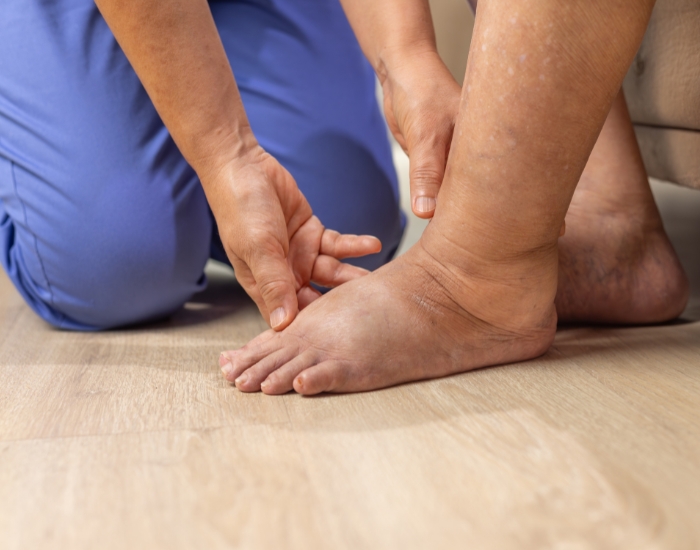
- Ankle or leg swelling
- Itching
- Burning
- Nighttime cramps
- Skin discoloration
- Changes in skin texture
- Slow-healing wounds
Read more about venous insufficiency and venous reflux.
Important: Visible veins do not automatically mean that you have a circulation problem. What matters is the overall pattern. Veins that become increasingly enlarged, twisted, or symptomatic deserve more attention than veins that are simply visible beneath otherwise healthy skin.
Symptoms That Suggest a Vein Problem
If the only change you have noticed is that your veins are easier to see, there may be no underlying medical problem.
However, visible veins become more concerning when they occur with symptoms associated with venous disease.
Watch for:
- Aching or throbbing in the legs
- A heavy or tired feeling in the legs
- Swelling around the ankles or feet
- Leg discomfort that worsens after standing
- Itching around visible veins
- Burning or irritation
- Nighttime leg cramps
- Twisted or bulging veins
- Brown or reddish skin discoloration
- Skin thickening or hardening
- Non-healing sores near the ankles or lower legs
The combination of prominent veins and persistent leg symptoms is a good reason to consider a vein evaluation.
Normal Visible Veins vs. Problematic Veins
| Feature | Often Normal | May Need Evaluation |
|---|---|---|
| Appearance | Thin, relatively straight veins beneath the skin | Large, twisted, bulging, or rope-like veins |
| Timing | More visible after exercise or heat | Progressively more prominent over time |
| Pain | Usually absent | Aching, throbbing, burning, or tenderness |
| Swelling | Usually absent | Ankle, foot, or leg swelling |
| Skin changes | No significant changes | Discoloration, thickening, irritation, or wounds |
Why Did My Veins Suddenly Become More Visible?
The word “suddenly” is important. If you noticed a change in your veins over a short period, consider what else changed around the same time.
After Exercise
If your veins became noticeable immediately after physical activity, increased blood flow and temporary vessel dilation may explain the change.
After Weight Loss
Significant weight loss can expose veins that were previously less visible because there is less tissue covering them.
During Hot Weather
Heat can make superficial veins more noticeable. The effect may become particularly obvious after a hot shower or outdoor activity.
During Pregnancy
Pregnancy can increase blood volume and place additional pressure on the veins in the pelvis and legs. This can contribute to more visible veins and varicose veins.
Learn more about varicose veins during pregnancy.
After Long Periods of Standing
Standing for long periods allows gravity to increase pressure in the veins of the lower legs. If your vein valves are already less effective, the veins may become more noticeable and symptoms may become more pronounced.
When the Change Persists
If your veins remain unusually prominent after the temporary trigger has passed, or if they continue becoming more visible over time, the change deserves closer attention.
Persistent prominence combined with swelling, aching, heaviness, or skin changes may indicate an underlying venous circulation problem.
Understanding the anatomy of leg veins and varicose veins can help explain why some veins become more prominent when venous pressure increases.
How Are Prominent Leg Veins Evaluated?
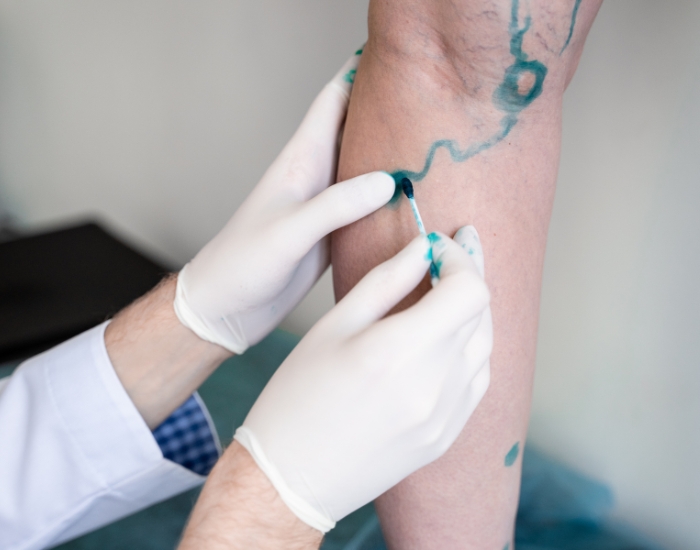
A vein specialist typically begins by reviewing your symptoms, medical history, risk factors, and how the veins have changed.
The physical examination may include looking for:
- Varicose veins
- Spider veins
- Leg swelling
- Skin discoloration
- Skin texture changes
- Tenderness
- Signs of inflammation
- Other circulation-related changes
Duplex Ultrasound
If an underlying venous problem is suspected, a duplex ultrasound may be used to evaluate blood flow through the leg veins.
Ultrasound can help identify abnormal blood flow and venous reflux. It may also help determine which veins are affected and guide treatment decisions when intervention is appropriate.
If you are wondering whether ultrasound can identify vein problems, read more about how ultrasounds can diagnose varicose veins.
Treatment for Prominent or Varicose Veins
Not every visible vein requires treatment.
If the veins are simply visible but are not causing symptoms or related health concerns, your healthcare professional may recommend observation and general measures to support healthy circulation.
When prominent veins are associated with symptomatic varicose veins or venous reflux, treatment may be appropriate.
Conservative Measures
Depending on your condition, conservative approaches may include:
- Regular walking and physical activity
- Avoiding prolonged sitting or standing
- Taking movement breaks throughout the day
- Leg elevation when appropriate
- Compression therapy when recommended
- Maintaining a healthy weight
Read about conservative treatment options for varicose veins.
Minimally Invasive Vein Procedures
When an underlying vein problem is responsible for significant symptoms, minimally invasive treatments may be considered.
The appropriate treatment depends on the veins involved, the severity of the condition, your symptoms, and the findings of your vascular evaluation.
Learn more about minimally invasive treatments for varicose veins.
Sclerotherapy
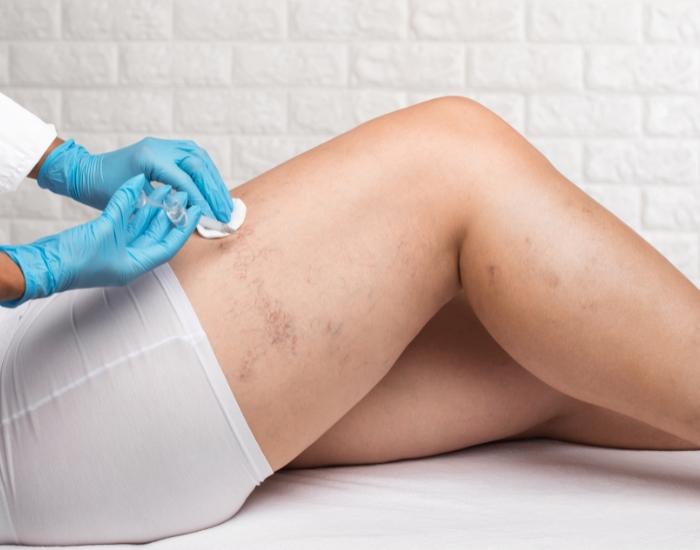
Sclerotherapy is commonly used to treat certain smaller abnormal veins, including some spider veins and small varicose veins. A solution is injected into the targeted vein, causing it to close and eventually become less noticeable.
Learn more about sclerotherapy treatment.
The goal of treatment is not simply to make veins less visible. When symptoms are present, treatment should address the underlying venous problem whenever possible.
Can You Prevent Veins From Becoming More Visible?
You cannot prevent every visible vein. Genetics, age, body composition, and other factors play a role.
However, healthy habits can support normal circulation and may help reduce symptoms associated with venous disease.
- Stay physically active.
- Walk regularly to engage the calf muscles.
- Avoid remaining in one position for long periods.
- Take regular movement breaks during desk work.
- Elevate your legs when appropriate.
- Maintain a healthy weight.
- Stay adequately hydrated.
- Follow medical recommendations for compression therapy.
- Have persistent swelling or painful varicose veins evaluated.
If you already have visible varicose veins, paying attention to changes in symptoms can help you recognize when an evaluation may be useful.
When Are Visible Veins an Emergency?
Most prominent veins are not an emergency. However, new sudden symptoms involving a leg should not automatically be attributed to ordinary visible veins or varicose veins.
Seek prompt medical evaluation if you develop sudden swelling, pain, warmth, redness, or tenderness in one leg, particularly if these symptoms are new and unexplained. These symptoms can occur with a deep vein thrombosis (DVT), which requires medical assessment.
Learn more about early symptoms of a blood clot in the leg.
Seek emergency medical attention if leg symptoms are accompanied by sudden shortness of breath, chest pain, coughing up blood, fainting, or severe difficulty breathing, as these can be signs of a potentially life-threatening complication of a blood clot.
Also seek urgent care for a leg that suddenly becomes severely painful, cold, pale, blue, numb, or weak, as these can indicate a serious arterial circulation problem.
Visible Veins and Vein Care in Houston
If you have noticed that the veins in your legs are becoming more prominent and you are unsure whether the change is normal, a vein evaluation can help identify the cause.
At Premier Vein & Vascular Center, our team evaluates a range of venous and vascular conditions, including varicose veins, venous insufficiency, venous reflux, spider veins, and other circulation problems.
An evaluation can help determine whether prominent veins are simply superficial veins that have become easier to see or whether an underlying venous condition is contributing to their appearance.
If you are experiencing visible veins along with aching, heaviness, swelling, itching, cramps, or skin changes, learn more about when you should see a vein doctor in Houston.
Are Your Leg Veins Becoming More Visible?
New or increasingly prominent veins may be harmless, but persistent visible veins accompanied by swelling, aching, heaviness, or skin changes deserve professional evaluation.
Call (832) 321-5355 to schedule a consultation with Premier Vein & Vascular Center.
Frequently Asked Questions
Why are the veins in my legs suddenly more visible?
Veins can become more visible because of exercise, heat, weight loss, dehydration, aging, or naturally thin skin. If the veins remain increasingly prominent or become twisted, bulging, painful, or associated with swelling, an underlying venous condition such as varicose veins or venous reflux may be contributing.
Are blue veins on my legs normal?
Blue or green superficial veins can be normal and are often visible beneath the skin, particularly in people with lighter or thinner skin or less body fat. Their appearance alone does not necessarily indicate disease. Changes in size, shape, symptoms, and surrounding skin are more important when determining whether evaluation is needed.
Why can I suddenly see veins that I could not see before?
A temporary change in temperature, exercise, weight, hydration, or blood flow can make previously subtle veins easier to see. If the change persists or progresses without an obvious explanation, particularly when accompanied by leg symptoms, it may be worth having the veins evaluated.
Can weight loss make leg veins more visible?
Yes. Losing body fat can reduce the amount of tissue covering superficial veins, making them easier to see. This does not necessarily mean that the veins have become unhealthy.
Can exercise make veins pop out on the legs?
Yes. Exercise increases blood flow and can temporarily make superficial veins more prominent. This is particularly noticeable after intense activity and in people with lower body fat. Persistent enlarged or twisted veins should be evaluated separately because they may represent varicose veins.
Can varicose veins suddenly become more visible?
Varicose veins can become increasingly prominent over time, although changes may appear more noticeable after prolonged standing, exercise, or heat. If a vein becomes painful, swollen, red, warm, or suddenly changes significantly, medical evaluation is appropriate.
Do visible veins mean I have poor circulation?
Not necessarily. Visible superficial veins can be completely normal. However, prominent veins accompanied by leg swelling, aching, heaviness, itching, cramps, skin discoloration, or non-healing wounds can be associated with chronic venous disease and should be evaluated.
When should I see a vein specialist for visible veins?
Consider seeing a vein specialist if your veins are becoming progressively more prominent, appear twisted or bulging, or are accompanied by aching, swelling, heaviness, itching, cramps, skin discoloration, or other changes. A vascular evaluation can determine whether venous reflux or another vein condition is present.
Can visible veins on the legs be treated?
Yes, depending on the underlying cause. Some visible veins require no treatment. When varicose or abnormal veins are causing symptoms or other concerns, treatment options may include conservative measures, sclerotherapy, or other minimally invasive procedures depending on the individual’s vascular findings.
Final Thoughts
Visible veins on the legs are not always a sign of a medical problem. Exercise, heat, weight loss, aging, genetics, dehydration, and naturally thin skin can all make superficial veins easier to see.
The more important question is what the veins look like and whether other symptoms are present. Straight, soft veins that simply show through the skin are often normal. Veins that become enlarged, twisted, bulging, or increasingly prominent may be associated with varicose veins or venous reflux.
Pay particular attention if visible veins occur with leg aching, heaviness, swelling, itching, cramps, skin discoloration, or slow-healing wounds. These symptoms can point toward an underlying venous circulation problem that may benefit from evaluation.
If you have noticed a persistent change in the appearance of the veins in your legs and are unsure whether it is normal, a professional vein evaluation can help identify the cause and determine whether treatment is necessary.
Medical Disclaimer
This article is provided for educational and informational purposes only and is not a substitute for professional medical advice, diagnosis, or treatment. Visible veins can have many causes, and an examination is necessary to determine the reason for a particular change. Sudden leg swelling, pain, warmth, redness, or tenderness may require prompt medical evaluation. Seek emergency medical attention for severe breathing difficulty, chest pain, fainting, or other potentially serious symptoms.